
Idli Recipe and Preparation
Pillow-soft steamed rice and lentil cakes, fermented overnight for a light, tangy bite and served with chutney and sambar.
Ingredients & method
Method
Amounts inside the steps follow the servings dial, so you never have to hold the arithmetic in your head.
-
Soak the rice and lentils
Rinse the 2 cup Idli rice (parboiled rice) and soak it in water in one bowl. In a separate bowl, soak the ½ cup Whole urad dal (split black gram, skinned) with the ½ tsp Fenugreek seed in water. Soak both for 4-6 hours.
Soaking softens the grains so they grind into a smooth, even batter, and gives fermentation a head start.
-
Grind the batter
Drain the urad dal and fenugreek and grind to a smooth, fluffy paste, adding 1¼ cup Water a little at a time. Grind the 2 cup Idli rice (parboiled rice) separately to a slightly grainy paste, then fold the two together by hand.
Whipping air into the urad dal paste as it grinds is what actually makes idli light — the trapped air does more work than any raising agent.
-
Ferment the batter
Cover the bowl loosely and leave it in a warm spot for 8-10 hours, or until it has doubled in volume and looks bubbly on top.
Wild yeasts and bacteria in the rice and dal feed on the starches overnight, producing the air bubbles and gentle tang that give idli its texture and probiotic content.
-
Season the batter
Once fermented, gently fold in the Salt to taste without deflating the batter.
Adding salt after fermentation, not before, keeps the fermentation lift intact right up to steaming.
-
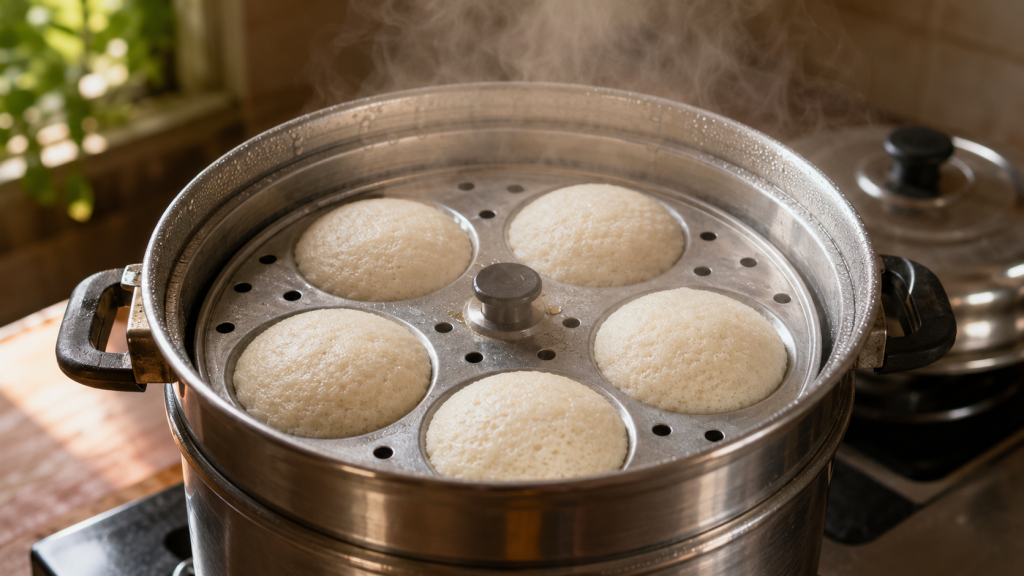
Steam the idlis
Grease the idli mould plates with 1 tsp Oil, ladle in batter to fill each cavity about three-quarters full, and steam over boiling water for 10-12 minutes, until a toothpick comes out clean.
Gentle steam heat cooks the rice and lentil proteins evenly without drying the idli out or forming a crust, the way baking or frying would.
-
Rest and unmould
Turn off the heat and let the idli stand rest for 2 minutes before running a wet spoon around each idli to lift it out.
A short rest lets the idlis firm up just enough that they release cleanly instead of tearing or sticking to the mould.
Cook’s notes
Use parboiled idli rice, not regular rice — it gives the batter the right stickiness.
Wet-grind the urad dal until it’s pale, fluffy, and floats on water. This whipped-in air is what makes idli soft, not baking soda.
Ferment in a warm spot (27-30°C). In cold weather, keep the batter in the oven with just the light on, or on top of the fridge near the compressor vent.
Fermented batter keeps in the fridge for up to 4 days; use a little less each day as it turns more sour.
Health benefits
- Fermentation encourages beneficial bacteria and yeasts, giving idli a mild probiotic quality and making the rice and lentils easier to digest.
- Steamed with no added fat beyond a light greasing of the mould, so it stays naturally low in fat and calories.
- Supplies plant protein from the urad dal alongside slow-digesting carbohydrate from the rice.
- Soft, bland and low in acidity, which is why it's often recommended for people recovering from illness or with a sensitive stomach.
- Naturally gluten-free.
General information about the ingredients, not advice about you. Nothing here is a medical or dietary recommendation, and no dish treats or prevents any condition. If you are managing a health condition, pregnant, or on a prescribed diet, ask a doctor or a dietitian.
Cons & who should be cautious
- High in carbohydrate relative to fibre and protein when eaten alone — people managing diabetes or insulin resistance should pair it with a protein-rich side rather than eating a large stack on its own.
- Not suitable for strict low-carb or ketogenic diets.
- Restaurant, hotel or instant-mix versions often carry more added salt — a consideration for anyone watching blood pressure.
- Those with rice or legume-related digestive sensitivity should consume in moderation.
Not a complete allergen declaration. Ingredient lists describe what we used and cannot account for cross-contamination or what your particular brand contains, so check the packaging of everything you cook with.
Nutrition facts (estimated)
Cook this next
Ranked by how much of tonight’s shopping they reuse, so nothing sits in the fridge going soft.